Posts

3rd Sunday of Easter (C)
Image
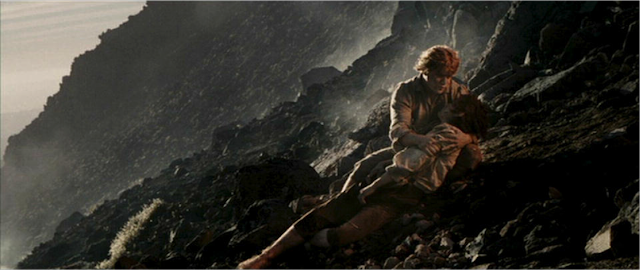
In the midst of their perilous climb to the heights of Mount Doom, Frodo and Sam stop to ask themselves “what sort of a tale we’ve fallen into” Is their story, they wonder, one that will have a good ending or a sad one? Both hobbits agree that, in any real story, the reader may guess what kind of tale it is, but “the people in [the tale] don’t know. And you don’t want them to.” At this point in their quest to destroy the One Ring and save Middle-earth, it seems – at best – unlikely that their story will end well. And yet Frodo and Sam are not discouraged from pressing on, for whether their story has a good-ending or a sad one is not ultimately up to them. What is up to them is to stay the course, even through the darkest pages, and not to close the book too early by giving up.  Although they carry on, Frodo and Sam do not, in fact, know what sort of tale they’ve fallen into. We, on the other hand, at least those of us who are familiar with The Lord of the Rings do, as did its auth...

Easter Sunday of the Resurrection of the Lord

Image
We, as humans, love to argue; and whether we’ve studied the science of how to argue or not, we all basically know how to do it, on the evidence of the fact that we argue about all of the things, all of the time. (What I just made, in case you missed it, was an argument!) Regardless of what we’re arguing about, all arguments rely on the same fundamental principle, which is this: when all the premises of an argument are true, the conclusion must also be true. It cannot be false. An example: All Easter eggs are filled with candy. There is a basket of Easter eggs on the kitchen table. Therefore, those eggs in the basket are filled with candy. The truth of the conclusion derives from the truth of the premises, unless, of course, you don’t fill your Easter eggs with candy, in which case, you can substitute candy for flax seeds or whatever else, and the argument still holds its water.  We love to argue, and we argue about everything: from how should fill Easter eggs to matters of global i...

Palm Sunday of the Lord's Passion (C)

Image
No matter on which side of the political aisle we may fall, even a cursory study of world history and a quick glance at the events of recent years and months is enough to make us skeptical of kings and those who seek to become them. “Power tends to corrupt,” Lord Acton famously said, “and absolute power corrupts absolutely.”  Yet from beginning to end the portrait of Jesus that Saint Luke paints in his Passion Narrative is nothing other than the royal portrait of a King. Christ tells his disciples to find a colt “on which no one has ever sat”, and he is later laid to rest in a tomb “in which no one had yet been buried”. Both evoke a King’s privilege. As Jesus enters Jerusalem, the crowds cry out, “Blessed is the king who comes in the name of the Lord,” while the Cross on which he hangs declares him the “King of the Jews”.  Jesus Christ is most certainly a King, and his power is absolute, for even at his Name “every knee should bend, of those in heaven on earth and under the ea...

4th Sunday of Lent (C)

Image
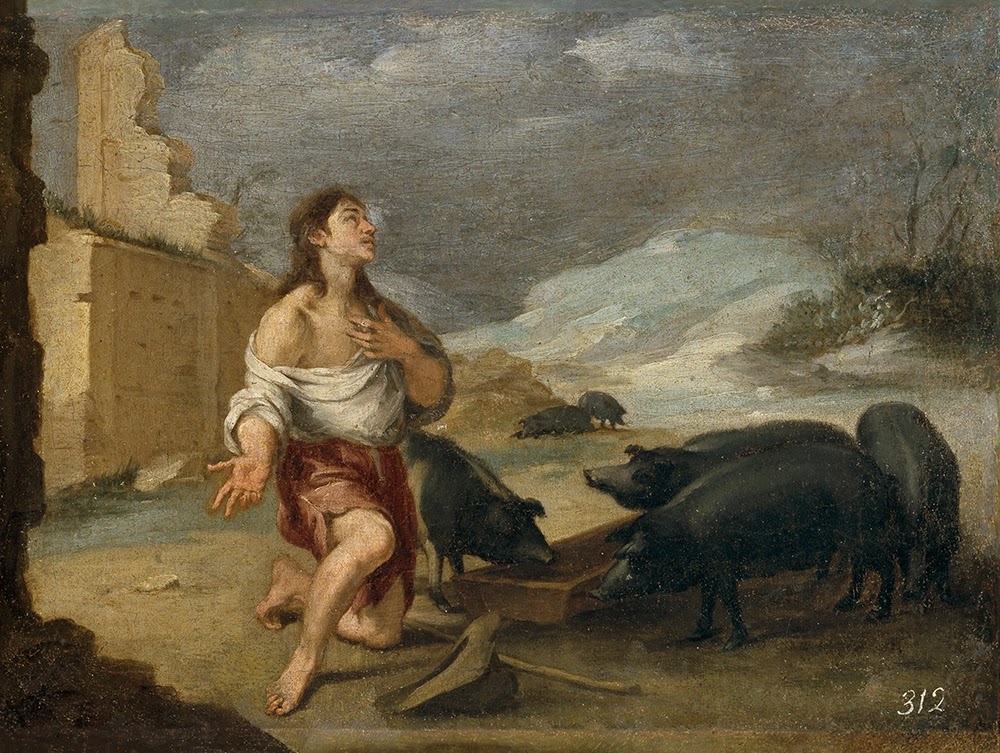
Without a doubt, the parable we have just heard is the most famous parable Jesus ever preached – that of the Prodigal Son. It has captured hearts and inspired imaginations down the centuries, and it speaks ever so powerfully to us today. Part of what makes this parable widely compelling comes from how easy it is to see ourselves in any of its characters: the son who squanders his inheritance, the father who forgives, or the brother who resents both. As we see ourselves in the characters, we can also read particular sins into the very center of the narrative. Whatever the younger son may have done to waste what his father gave him can easily stand for our own sins or the sins of our loved ones.  The sins from our own experience that we read into this parable, however, tend not to be the superficial or inconsequential ones but, on the contrary, those that are deep and damaging. We don’t compare the sin of the prodigal son to the little white lie we told when we were twelve; nor do we...

3rd Sunday of Lent (C)

Image
Does God want us to be happy? We may instinctively say, “Yes, I know God wants me to be happy,” but our day-to-day experience of being unhappy (in whatever form that takes for each of us) may lead us to think otherwise. We might try to explain away our unhappiness in the present moment in one of two ways. Perhaps we believe that God wants us to be happy, but he won’t let us be happy because of our sins. Or, perhaps we think that God wants us to be happy, but only in the next life and not in this one. When I’m feeling blue, I tend to put both together and think that God won’t let me be happy because of my sins, but happiness will be my reward in the life of the world to come – please God, I make it there.  Each of these attempts to explain the reality of our unhappiness despite God’s desire for us to be happy are, what we call half-truths. Taken as absolutes they’re false, but there’s a hint of truth in them. That hint of truth, however, is mixed with insidious lies – lies that the ...

2nd Sunday of Lent (C)

Image
I’m sure we have all wondered what heaven will be like. From the time that we first heard the Gospel and came to know the promise of eternal life, we have all carried with us some conception, however faint, of what heaven, our eternal reward, will be. Up and down the centuries, theologians and poets, musicians and painters, and all the rest have sought to describe the contours of heaven, inviting us to ask who will be there, what will it look like, what will we do, and similar questions.  Some years ago, I came across a novel that offered me less of a description of heaven than it gave me a new way of thinking about it. That book was Marilynne Robinson’s Gilead , which won the Pulitzer Prize in 2005. Gilead is the memoir of an old preacher named John Ames in which he reflects on his long life and ministry. John Ames is close to death and thus sets out to write a lengthy letter to his seven-year-old son to read after he passes, and his son is old enough to comprehend all the things...

1st Sunday of Lent (C)

Image
We are well aware that the season of Lent is about turning away from sin. This past Wednesday, we were told to “Repent and believe in the Gospel”, and we have hopefully all made a resolution to root out some kind of sin from our life over the next forty days. But for us to stop sinning, we have to understand why we sin in the first place. Otherwise, we’ll simply keep spinning our proverbial wheels in the mud. Why do we sin? That is a question that we each must ask for ourselves in the quiet of our heart, as we each have our own reasons for being drawn to one sin or another. We believe, however, that the light of Christ reveals to us our humanity, and that applies both to us in particular as individuals and in general as a species. Thus, we ought to seek to discover how that light, which reaches us today through the Scriptures we have heard, reveals us to ourselves and helps us understand in particular and in general why we sin.  I propose to you the following thesis: We sin because...